I popoli come gli individui da questi discendenti portano con sé, sempre, gli elementi con i quali sono stati forgiati i loro antenati, dalla creazione, quindi dalla natura.
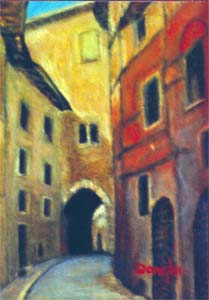
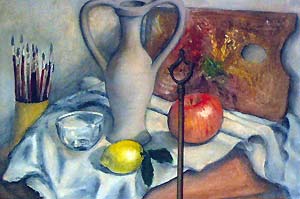
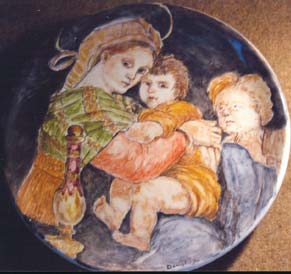
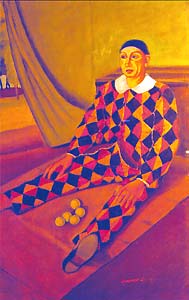
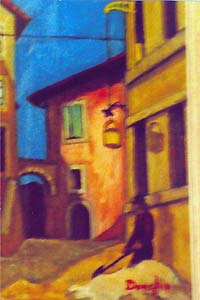
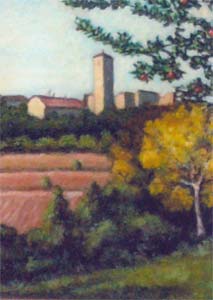
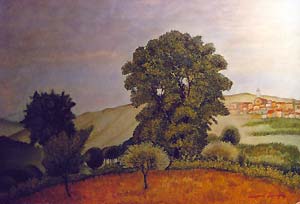
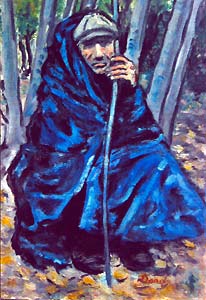
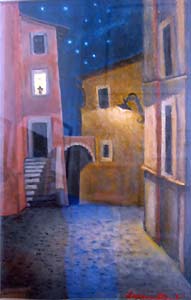
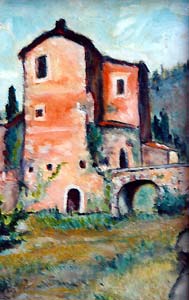
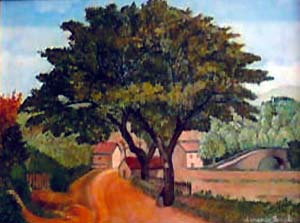
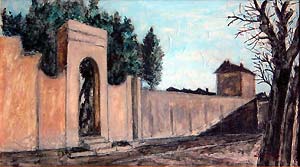
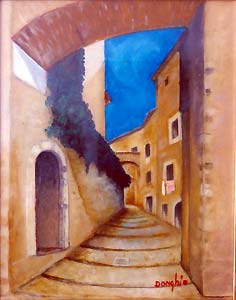
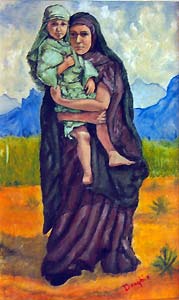
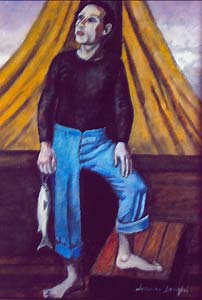
Di queste prove ce ne sono state tante e fra le più vicine a noi ne abbiamo una attuale quella del pittore LORENZO DONGHI -“DONGHI NIPOTE” ha incorporato il dono sublime dell’arte pittorica tramandatogli dal suo grande zio: ANTONIO DONGHI; verista nel modo più assoluto, padrone del colore che usa con parsimonia di slanci tenendosi sempre nei limiti del reale, umanizzando l’arte con la sua ideale sensibilità.
Dopo le recenti esperienze ossia: la significativa collettiva nel salone dell’YMCA a piazza Indipendenza, “MAGGIO MISTICO” e la brillante estemporanea di Licenza, l’artista ha rivelato ancora una volta nuove sensazioni del suo intimo in continua ricerca del “meglio” ch’egli realizza di volta in volta con piena efficacia e la prova è stata confermata dai critici e dal numeroso pubblico che lo hanno classificato tra i pittori ad alto livello artistico.
A LORENZO DONGHI vada 1’auspicio dì poter raggiungere 1′ alta vetta nel mondo dell’ arte conquistata nel passato dal suo grande Congiunto.
Artigiano acconciatore, fin dalla più tenera età ha frequentato musei e gallerie attratto dalle varie tecniche pittoriche. Nel 1943-44 ha frequentato con profitto in Vaticano la Scuola di Ornato, fondata da Raffaello. Nel 1949 e 1950 frequentò la scuola di Ornato e Disegno del Comune di Roma, classificandosi, alla fine dei due anni di corso, rispettivamente 2° e l°.
Cura molto il disegno sia della figura che della prospettiva. Da molti anni dipinge con delle regole di autodidatta inseguendo in continuazione effetti appresi con le osservazioni fatte in giovane età.
Ha partecipato a oltre dieci mostre collettive con buoni piazzamenti, ma più che partecipare a mostre preferisce dipingere
Ha esposto a Trevi nella collettivaF 30×20DEDALO Spazio Arte in Viale Ciuffelli, 12
Nato a Roma nel 1927. Dopo gli studi di architettura, fonda il gruppo Forma 1 insieme a Carla Accardi, Turcato, Consagra, Perilli, Sanfilippo. Negli anni ‘50 organizza la galleria Agè d’or a Roma e dirige il dipartimento di Arte per l’Università di Pennsylvania. Partecipa alle Biennali di Venezia del 1960 e del 1988, e nel 1970 è componente della giuria. Ha fondato con Nino Caruso il Centro Internazionale della Ceramica Montesanto di Todi. Tra le molte retrospettive: Museo d’Arte Moderna di Parigi, The Albright-Knox Gallery Buffalo e Galleria Nazionale d’Arte Moderna Roma.
The Cantori di Cannaiola’s a poliphonic chorus “Città di Trevi” Choirmaster: Mr. Mauro Presazzi
The Cantori di Cannaiola’s choir was set up in 1969, by Father Sileno Cariolati, as a group for a liturgical service. In the subsequent years the repertory has been extended to secular and folk music, taking part in a number of concerts, too.
The choir is one of the Umbria’s Choir Regional Association (A.R.C.UM.: in Italian: Associazione Regionale Cori dell’Umbria) founders.
The chorus, alter a period devoted essentially to a liturgical service, and also favourably supported by the Trevi town council, has newly begun to make exhibitions in concert activities under the guide of the new choirmaster, Mr. Francesco Corrias (2000-2005). Their aim is to promote with a renovated engagement the choral chant and let it widespread through the territory.
The repertory includes medieval music excerpts, Renaissance poliphonies, contemporary, popular, gospel and negro-spiritual music. The choir has often been invited by famous choral reviews (the XXII Choral Review held in Poggibonsi, the XXII Choral Review of Perugia, “In canto 2001 – Itinerario Corale Internazionale e Chiese e Arte 2001 (International Choral Itinerary and 2001 Churces and Arts) ” in Citta di Castello, the X Choral Review in the town of Corciano, etc.). Furthermore, it has participated in the 56th Edition of the Umbria Musical Festival and the 58th Edition of the Wandering Choral Itineraries. Since November 2002 it has been setting up die Choral Review named «Don Sileno Cariolati». In August 2003 the DEPAPS Feminine Choir- in Argostoli – a town of Cephalonia (Greece) was host to the choir, where the latter held two concerts on the occasion of the 60th anniversary of Second World War tragical events.
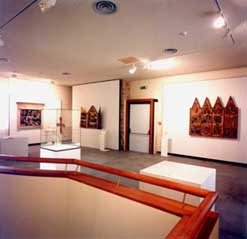
THE CHURCH AND CONVENT OF ST. FRANCIS. The original Romanesque church was completely rebuilt in the 14thC. The crucifix is of the early 1300s and the organ dates back to 1509. The convent, founded by St. Francis himself, was eventually completely rebuilt. In the cloisters the frescoes are by Gagliardi (1614) The premises of the ex-convent now house.
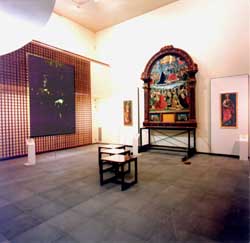
THE ST. FRANCIS ART COLLECTION
with paintings from the 14th – 17th centuries and Roman remains. Particularly noteworthy are: a set of three panels and a multi-panelled painting attributed to the Foligno school, an altar piece, St. Catherine and St. Cecilia by Spagna and an Assumption by Orbetto.
THE FLASH ART MUSEUM (plan no.26 C2) This is housed in one of the most prestigious Residences in Trevi, namely the Lucarini residence opposite the church of St. Emiliano. This contemporary Art Museum hosts regular international exhibitions. (opening times: 10-13 and 15-18.30. Closed Mondays and Tuesdays (Translated by Sheila Rylands 1998)
The use of oil for lighting is strictly linked to a particular tool: the oil lamp, which was the most common mean of lighting in ancient times. In such a container people burnt the oil through a wick. The invention of oil lamps dates back to very ancient times. Its use, besides the lighting of houses, temples, public and private buildings, acquired particular importance in burial rites, as a present that accompanied the dead, an exorcism and symbol of rebirth. The most common material was clay but there were also several bronze, precious metal, glass or stone lamps.
The shape underwent great changes overt time. From a morphological point of view we can identify three parts: the body, the beak and the handle. The most ancient shapes were open, whereas in Greek and Roman times they were closed. In the closed shapes, in the centre of the disc that constitutes the upper part of the tank, there is a hole for pouring in the oil from neck pots, like the “buttus”, and another smaller hole in order to make the draught better.
Both literary sources and archaeological finds report us customs concerning the treatment of one’s personal appearance. The use of cosmetics expresses the need to communicate one’s individuality through targeted messages intended for a precise purpose. The use of cosmetics and fragrant substances is at first linked to magic-religious functions and afterwards it becomes a decorative phenomenon of the person. The study of archaeological finds, from artistic production to material culture, allows us to reconstruct the cosmetic habits of ancient times.
Most of the fragrant essences came from the East and were traded ever since the 8th– 7th century B.C. The several containers of ointments of Greek or oriental production, also in the Magna Graecia and Etruscan or Italic areas, show a thriving trade and a widespread use of such products at least in the affluent classes.
Olive oil formed the fat base for the various fragrant components; the “omphacium” in particular, obtained from big green olives, was the most popular item (Plinius, Naturalis Historia, XIII, 2, 3).
In the Roman world the use of cosmetics was all pervading and several literary sources tell us about it. For example Ovid is the author of a manual on make-up, whereas other authors (Martial, Seneca, Horatio etc) describe aspects of everyday life linked to body care.
Several archaeological finds bear witness to the use of make-up and perfumes: baked clay, unguentary vases, glass, hard stones, oil containers, mortars for the preparation of cosmetic pastes, spatulas to take small quantities of balm from a container or to mix products.
Cosmetics was not limited to women. For example athletes also used perfumed oils. Typical of the male world and linked to personal care was the “strigil”, an instrument for cleansing after doing exercises in the gymnasium. It was common in the Greek and Etruscan world already in the 5th-4th century B.C..
The representation of the olive tree as a feature of the landscape in wider scenes or as an isolated element is quite common in Greek and Roman art both in pictorial works and in sculpture or in toreutics and in vase painting, where the olive tree is often the symbol of the landascape against which the scene is set.
More frequently the representation of the olive branch seems to acquire a purely decorative value, even if one cannot exclude the symbolic value of the landscape and the use of the container on which it is represented. This type of representation appears in the Attic art of the 5th century B.C. and later also in the pottery production made in Greek colonies and areas in close contact and trade relations with Greece, like for instance Etruria. A typical example is a kind of cup, the “glaukes” (from “glaux”, owl) decorated on both sides by an owl (Athena’s symbol) flanked by two olive branches, maybe a symbol of the introduction of the olive tree into Attica by Athena.
The museum is situated in the evocative area of the ex Saint Francis convent, which also houses the homonymous Church and the Art Collection. It is the first public museum in Italy and in Europe dedicated to oil and olive tree and is divided into four sections:
Botany
Getting to know oil and the olive tree
Oil as a symbol of peace
Oil history
The exhibition offers visitors different approaches. Information on the olive tree in history, botany and agronomy is provided by boards with data of Centro Nazionale delle ricerche (National Research Centre). Ro Marcerano’s cartoons are intended for children. Interactive devices give details about the pressing techniques, while documentary films show the “fiscoli” (or “buscoli”, coconut fibre filter discs) are handcrafted, the different cultivation phases and the removal of the diseased parts of a plant with a technique called “slupatura”.
Sophisticated equipment enables visitors to taste and learn how to feel the difference between the oil varieties, while a section is designed for chemical tests to quantify the oil acidity. And if you want to enhance the quality of your cuisine with new and tasty dishes you can download and print chef Angelo Paracucchi’s tasty recipes of gastronomic specialties prepared with olives and olive oil.
The museum also has an important private collection of archaeological finds – kindly loaned by Jean-Pierre and Fiorella Cottier – connected with the symbolic value of the olive tree and the use of oil: a remarkable collection of oil lamps some of which are Phoenician and date back to the 8th century B.C. Equally interesting is the collection of unguentary vases and ancient objects decorated with oil-related motifs. A big three-screw press, built at the turn of the 18th century, and a grindstone mark the end of the tour.
It was opened in October 1996 in the south-west wing of the former Saint Francis Convent and it is named after it.
The successful renovation of the premises was supervised by architect Giuseppe Bettini who managed to turn the extant spaces into a functional exhibition area.
Particular attention is to be given to the architectural structures and decorations of the Cloister and of Saint Francis Church which are an integral part, an exceptional “container” of the exhibition works and nicely complete them.
The collection includes pictures and sculptures, archaeological finds, drawings and relics from the former municipal gallery and the historical archives which are being rearranged.
Guided tour
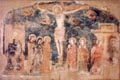
The northern wall of the entrance room is occupied by a big fresco of the late 14
th
century, removed in the early fifties from a wall of the former church of Santa Croce monastery. It represents the
Crucifixion, the Virgin Mary on the throne with Child and Annunciation
.
The rooms on the ground floor contain different objects which are being rearranged to form the Town and Territory Museum.
Two-faced Janus, head of the 2nd century.
Saint Francis from Assisi, little sculpture of Tuscan school, 16th century, coming from the church of the Madonna delle Lagrime.
Shelves in travertine, 9th century.
Drawings of the Town Hall and of the Ball Game.
Papal Bull with which Pio VI granted Trevi city status in 1784.
Ten votive Tablets, of the early 16th century, painted with different techniques, coming from the church of the Madonna delle Lagrime.
“Fondi Oro” room on the second floor
Altar cross, tempera on board, by an Umbrian master. Reminiscent of the Master of Cesi, about 1310, in bad condition.
Adoration of the Magi, by a Flemish painter of late 15th century, coming from S. Domenico convent. The characters look very old.
Triptych
with scenes of Christ’s life. Work of the early 15
century ascribed to Giovanni di Corraduccio. It comes from the church of S. Croce in Piaggia. It bears the clients’ names: Cicco Urighi and Jacobuccio di Mattia.
Polyptych
, similar to the Triptych, about 1430, originally in Saint Francis church. The central part is missing and therefore originally it had five panels.
pannelli.
Portable cross with the Madonna and Saint John on one side and Saint Francis from Assisi and San Ludovico da Tolosa on the other.
Deposition
, by a Tuscan-Roman painter of 1520-30. It comes from the church of the
Madonna delle Lagrime.
On the ground floor you can admire the following works:
Emmaus supper, by a local painter from Umbria or the Marches of the end of the 16th century, coming from the convent of the Capuchins.
Virgin Mary with Child, S. Maria Maddalena and S. Caterina: painting of the early 17th century, ascribed to a painter from Umbria or the Marches.
People in prayer, lower part of an altar-piece commissioned by Muzio Petroni for the “Compagnia del Rosario” in the Sant’Emiliano’s Church. Maybe the author is Ascensidonio Spacca, called ”il fantino”; the work dates back to the early 17th century.
Assumption of the Virgin and Saints
, painting by Tommaso Maurizi and dated 1602.
In the centre of the wall at the end of the room: Coronation of the Virgin and Saints, splendid altar-piece by Giovanni di Pietro, called “lo Spagna”. S. Martino who shares his cloak with a poor man and Saint Francis stigmas are portrayed in the predella. The central part, missing since the 19th century, was found by Federico Zeri in 1969 in Tucson Museum, Arizona. The work was originally placed on the high altar of San Martino Church.
Two other paintings by lo Spagna, portraying Saint Cecily and Saint Catherine, are on either side of the “coronation”. They come from the church of the Madonna delle Lagrime,, where they adorned S. Alfonso chapel, the second on the left from the entrance.
by Vincenzo Turchi called l’Orbetto. It is a big, wonderful painting, recently restored, a “timeless picture”. It was painted in Rome and brought to Trevi in about 1640.
Miracle of S. Vincenzo Ferrer, probably painted in 1729 on the occasion of the building of the new altar dedicated to the Saint in San Domenico Church. The painting is ascribed to a painter of the “Nasini circle”.
The incredulity of San Tommaso, first decade of the 17th century, by a Roman painter. It comes from the former church of the saints Tommaso and Lazzaro, on the via Flaminia.
San Francesco di Paola, also by a Roman painter of the second half of the 18th century. Maybe it was originally in the Capuchins’ church.
Going out onto the open gallery overlooking the Cloister, you can enter Saint Francis Church.
Subject: KATHARINA FROM ALESSANDRIA
Author: CARL TIMNER
Born in Berlin in 1933. He was Guttuso’s assistant at the Fine Arts Academy in Hamburg.
Technique: Oil painting
Size: cm 160 x 203
Description: The picture is a parable against all kinds of fanaticism and against war. Behind Katharina’s figure you can see the historical figure of the Hellenistic philosopher Hypazia, who was killed by a little group of fanatics that tore her to pieces with some shells, while Saint Katharina is rent by a cogwheel and beheaded.
Provenance: Author’s donation on the occasion of the anthological exhibition “Opere” held in this museum from the 8th of June to the 6th of July 2003.