Categoria: Da sapere

  • Richard Asinari di San Marzano – pittore

    Richard Asinari di San Marzano Ha esposto a Trevi nelle collettive: F 30×20 – 2003 Parallel Time – 1997

    Nato a Birmingham nel 1952, ha vissuto in Inghilterra, Vietnam, Australia, attualmente vive e lavora a Spoleto. Si ?formato in Australia alla Art School at James Street di Perth e all?East Sidney Technical College di New South Wales. Le sue opere sono presso collezioni private negli Stati Uniti e in Australia, e presso collezioni pubbliche anche in Italia.

    Trevi, Italy. Mostra di pittura Parallel time - Richard Asinari di San Marzano, I Sing (preview)

    Ritorna alla

    Ritorna alla pagina EVENTI

    Z03


  • Gara podistica nazion.2002

    7-8 SETTEMBRE 2002

    Atletica C.V.A. TREVI

    Hotel della Torre – TREVI

    con il patrocinio dei Comuni di Trevi e Montefalco

    organizza

    Gara podistica nazionale in due tappe

    Giro medievale Trevi - Montefalco

    4° Giro Medioevale Trevi-Montefalco

    1ª tappa Sabato 7 Settembre

    2ª tappa Domenica 8 Settembre

    Ritrovo ore 9,30 – partenza ore 10
    da Borgo Trevi (presso CVA Comunale)
    Arrivo a Montefalco, Piazza del Comune – Km 15
    Ristoro e premiazione per i primi di ogni categoria

    Ritrovo ore 8,30 – partenza ore 9,30

    da Piazza del Comune Montefalco

    Arrivo a Trevi, Piazza Mazzini – Km 16

    Ristoro – Consegna pacco gara e premiazione finale

    ISCRIZIONI
    Tel e Fax 0742.78501 e-mail: trevana@telematicaitalia.it oppure Tel e Fax 0742.67404

    Quota:

    € 13

    da pagare al ritiro del pettorale

    (+€2,50

    per coloro chevogliono

    utilizzare il trasporto

    navetta)

    Termine iscrizioni:

    mercoledì 4 settembre

    Consegna pettorali
    Venerdì 6 settembre,
    dalle 17 alle 20, presso CVA Comunale Bocciodromo – Borgo Trevi
    oppure: Sabato 7 dalle 8 alle 9

    Cat. Uomini
    anni
    a)18-34
    b)35-39
    c)40-44
    d)45-49
    e)50-54
    f)55-59
    g)60-64
    h)65 e oltre

    Premi Uomini Verranno premiati i primi 15 di ogni categoria in B.V e premi in natura

    1° class. € 500 B.V.

    2° class. € 400 B.V.

    3° class. € 300 B.V.

    4° class. € 250 B.V.

    5° class. € 200 B.V.

    6° class. € 180 B.V.

    7° class. € 150 B.V.

    8° class. € 150 B.V.

    9° class. € 130 B.V.

    10° class. € 130 B.V.

    dal 11° al 15° € 80 B.V.

    dall’16° al 20° € 60 B.V.

    Verranno premiati i primi 20 di ogni categoria

    (Categorie G-H i primi 10)

    Sabato 7 settembre ore 20 Pasta party presso CVA Borgo Trevi.

    Ogni atleta,al ritiro del pettorale, riceverà un coupon per partecipare gratuitamente al pasta party. Si prega di segnalare sulla scheda di iscrizione. Chi desidera far partecipare parenti o amici può acquistare i cuopon a € 3 cadauno

    Cat. Donne

    anni

    18-34

    35 e oltre

    Premi Donne Verranno premiate le prime 10 di ogni categoria in B.V e premi in natura

    1ª class. € 350 B.V.

    2ª class. € 250 B.V.

    3ª class. € 180 B.V.

    4ª class. € 100 B.V.

    5ª class. € 60 B.V.

    Prenotazioni alberghiere

    Trevi

    Albergo Il Terziere, tel. 0742.78359

    Albergo La Cerquetta, tel. 0742.78366

    Residence sul Clitunno, tel. 335.6773525

    Agriturismo I Mandorli, tel. 0742.78699

    Hotel della Torre, tel. 0742.391212

    Residenza La Passeggiata 347.9272669

    Montefalco
    Hotel Ringhiera Umbra, tel. 0742.379166
    Hotel Nuovo Mondo, tel. 0742.379243

    Pacco gara:

    Sacca, T-shirt, marsupio, cappello,

    olio, vino e altri prodotti tipici

    Premi Società

    La manifestazione si svolgerà con qualsiasi condizione atmosferica

    Funziona servizio docce.

    Soc. regionali con

    minimo 15 iscritti

    1ª € 100 B.V.

    2ª € 80 B.V.

    3ª € 50 B.V.

    4ª € 25 B.V.

    5ª € 25 B.V..

    Soc. extraregionalii

    con minimo 10 iscritti

    1ª € 150 B.V.

    2ª € 120 B.V.

    3ª € 100 B.V.

    4ª € 70 B.V.

    5ª € 50 B.V.

    Informazioni:

    Tel. 328.6763412 –

    347.4196289 – 368.7187600 – 338.9141302

    Alla manifestazione possono partecipare tutti coloro che abbiano compiuto i 18 anni di età entro il 7 settembre 2002, tesserati Fidal o altri Enti di Promozione Sportiva.
    Iscrizione per gruppi: lista nominativi con data di nascita e numero del tesserino, firmata dal presidente. Per i singoli esibire il tesserino al ritiro del pettorale.

    Ritorna alla pagina Ritorna alla pagina EVENTI

    Ritorna alla pagina ATLETICA TREVI

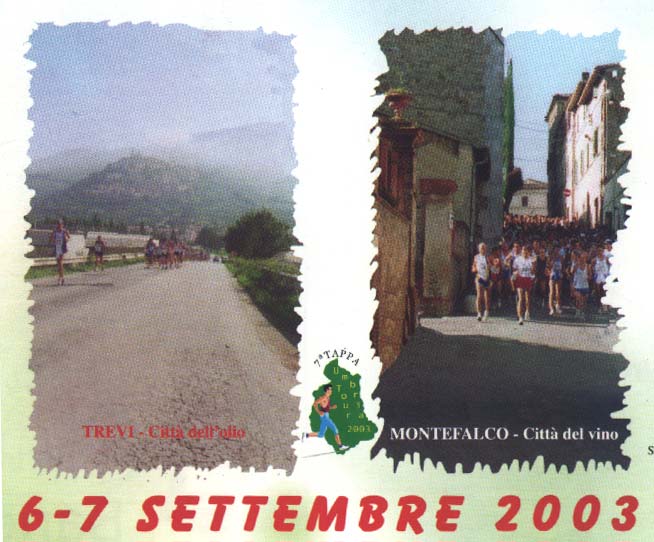
  • Gara podistica nazion.2003

    Atletica C.V.A. TREVI

    Hotel della Torre – TREVI

    con il patrocinio dei Comuni di Trevi e Montefalco

    organizza

    Gara podistica nazionale in due tappe

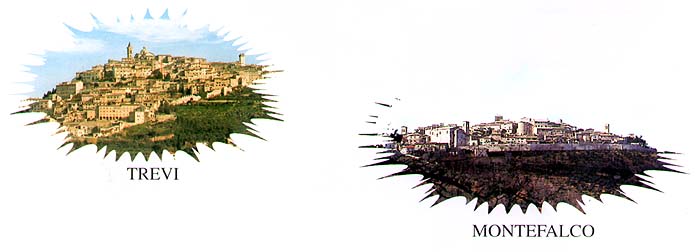
    Giro Medievale Trevi - Montefalco 2003

    5? Giro Medioevale Trevi-Montefalco

    1? tappa Sabato 6 Settembre

    Ritrovo (C.V.A. Comunale) ore 9 – partenza ore 10 da Borgo Trevi
    Arrivo a Montefalco, Piazza del Comune – Km 15 – Ristoro e premiazione per i primi di ogni categoria

    2? tappa Domenica 7 Settembre

    Ritrovo ore 8,30 – partenza ore 9,30 da Piazza del Comune Montefalco
    Arrivo a Trevi, Piazza Mazzini – Km 16 – Ristoro – Premiazione finale

    ISCRIZIONI
    Tel e Fax 0742.78501 e-mail: trevana@telematicaitalia.it oppure Tel e Fax 0742.67404

    Quota:

    ? 13

    da pagare al ritiro del pettorale

    (+?2,50

    per coloro che vogliono

    utilizzare il trasporto

    navetta)

    Termine iscrizioni:

    mercoled?3 settembre

    Consegna pettorali
    Venerd?5 settembre,
    dalle 17 alle 20, presso CVA Comunale Bocciodromo – Borgo Trevi oppure: Sabato 6 dalle 8 alle 9

    Cat. Uomini a)18-34 anni
    b)35-39
    c)40-44
    d)45-49
    e)50-54
    f)55-59
    g)60-64
    h)65 e oltre

    Premi Uomini Verranno premiati i primi 15 di ogni categoria in B.V e premi in natura

    1? class. ? 500 B.V.

    2? class. ? 400 B.V.

    3? class. ? 300 B.V.

    4? class. ? 250 B.V.

    5? class. ? 200 B.V.

    6? class. ? 180 B.V.

    7? class. ? 150 B.V.

    8? class. ? 150 B.V.

    9? class. ? 130 B.V.

    10? class. ? 130 B.V.

    dal 11? al 15? ? 80 B.V.

    Verranno premiati i primi 20 di ogni categoria

    (Categorie G-H i primi 10)

    Sabato 6 settembre ore 20 Pasta party presso CVA Borgo Trevi.

    Ogni atleta,al ritiro del pettorale, ricever?un coupon per partecipare gratuitamente al pasta party. Si prega di segnalare sulla scheda di iscrizione. Chi desidera far partecipare parenti o amici pu?acquistare i coupon a ? 3 cadauno

    Cat. Donne i) 18-34anni
    l) 35-44
    m) 45 e oltre

    Premi Donne Verranno premiate le prime 10 di ogni categoria con premi in natura

    1? class. ? 300 B.V.

    2? class. ? 200 B.V.

    3? class. ? 150 B.V.

    4? class. ? 100 B.V.

    5? class. ? 50 B.V.

    Prenotazioni alberghiere

    Trevi

    Albergo Il Terziere, tel. 0742.78359

    Albergo La Cerquetta, tel. 0742.78366

    Residence sul Clitunno, tel. 335.6773525

    Agriturismo I Mandorli, tel. 0742.78699

    Hotel della Torre, tel. 0742.391212

    Residenza La Passeggiata 347.9272669

    Montefalco
    Hotel Ringhiera Umbra, tel. 0742.379166
    Hotel Nuovo Mondo, tel. 0742.379243

    Pacco gara:

    Polo della manifestazione

    olio, vino e altri prodotti tipici

    Premi Societ?/big>

    Soc. regionali con

    minimo 15 iscritti

    1? ? 100 B.V.

    2? ? 80 B.V.

    3? ? 50 B.V.

    4? ? 25 B.V.

    5? ? 25 B.V..

    Soc. extraregionalii

    con minimo 10 iscritti

    1? ? 150 B.V.

    2? ? 120 B.V.

    3? ? 100 B.V.

    4? ? 70 B.V.

    5? ? 50 B.V.

    Informazioni:

    Tel. 328.6763412 –

    347.4196289 – 368.7187600 – 338.9141302

    Alla manifestazione possono partecipare tutti coloro che abbiano compiuto i 18 anni di et?entro il 6 settembre 2003, tesserati Fidal o altri Enti di Promozione Sportiva.
    Iscrizione per gruppi: lista nominativi con data di nascita e numero del tesserino, firmata dal presidente. Per i singoli esibire il tesserino al ritiro del pettorale.

    Ritorna alla pagina Ritorna alla pagina EVENTI

    Ritorna alla pagina ATLETICA C.V.A.

  • Gara podistica nazion.2001

    8-9 SETTEMBRE 2001
    Atletica C.V.A. TREVI
    con il patrocinio dei Comuni di Trevi e Montefalco
    organizza
    Gara podistica nazionale in due tappe
    Giro medievale Trevi-montefalco 2001
    Citt?dell’olioCitt?del vino
    3? Giro Medioevale Trevi-Montefalco

    1? tappa Sabato 8 Settembre

    2? tappa Domenica 9 Settembre

    Ritrovo ore 9,30 – partenza ore 10
    da Borgo Trevi (presso CVA Comunale)
    Arrivo a Montefalco, Piazza del Comune – Km 15
    Ristoro e premiazione per i primi di ogni categoria

    Ritrovo ore 8,30 – partenza ore 9,30

    da Piazza del Comune Montefalco

    Arrivo a Trevi, Piazza Mazzini – Km 16

    Ristoro – Consegna premio partecipazione e premiazione finale

    ISCRIZIONI
    Tel e Fax 0742.78501 e-mail: trevana@telematicaitalia.it oppure Tel e Fax 0742.67404
    Inviare Vaglia Postale a: Comitato organizzatore Giro Medioevale c/o Tipografia Trevana
    06032 Borgo Trevi (PG)

    Quota:

    ? 250

    (+? 50 per chi vuole

    utilizzare il trasporto

    navetta)

    Termine iscrizioni:

    mercoled?5 settembre

    Cat. Uomini
    anni
    a)18-34
    b)35-39
    c)40-44
    d)45-49
    e)50-54
    f)55-59
    g)60-64
    h)65 e oltre

    Premi Uomini Verranno premiati i primi 15 di ogni categoria in B.V e premi in natura

    1? class. ? 1.2000 B.V.

    2? class. ? 9000 B.V.

    3? class. ? 6000 B.V.

    4? class. ? 4000 B.V.

    5? class. ? 3000 B.V.

    6? class. ? 2500 B.V.

    7? class. ? 2000 B.V.

    8? class. ? 2000 B.V.

    9? class. ? 2000 B.V.

    10? class. ? 2000 B.V.

    dal 11? al 15? ? 1500 B.V.

    dall’16? al 20? ? 1000 B.V.

    Verranno premiati i primi 20 di ogni categoria

    (Categorie G-H i primi 10)

    Consegna pettorali
    Venerd?7 settembre,

    dalle 17 alle 20, presso CVA Comunale Bocciodromo – Borgo Trevi

    oppure: Sabato 8 dalle 8 alle 9

    Cat. Donne

    anni

    18-34

    35 e oltre

    Premi Donne Verranno premiate le prime 10 di ogni categoria in B.V e premi in natura

    1? class. ? 6000 B.V.

    2? class. ? 5000 B.V.

    3? class. ? 3000 B.V.

    4? class. ? 2000 B.V.

    5? class. ? 1000 B.V.

    Prenotazioni alberghiere

    Trevi

    Albergo Il Terziere, tel. 0742.78359

    Albergo La Cerquetta, tel. 074278366

    Residence sul Clitunno, tel. 335.6773525

    Agriturismo I Mandorli, tel. 0742.78699

    Hotel della Torre, tel. 0742.391212

    Montefalco
    Hotel Ringhiera Umbra, tel. 0742.379166
    Hotel Nuovo Mondo, tel. 0742.379166

    Pacco gara:

    maglia ricordo della manifestazione,

    olio, vino e altri prodotti tipici del luogo

    Premi Societ?/big>

    La manifestazione si svolger?con qualsiasi condizione atmosferica

    Funziona servizio docce.

    Soc. regionali con

    minimo 25 iscritti

    1? ? 2000 B.V.

    2? ?1500 B.V.

    3? ? 1000 B.V.

    4? ? 500 B.V.

    5? ? 500 B.V..

    Soc. interregionalii

    con minimo 10 iscritti

    1? ? 3000 B.V.

    2? ? 2500 B.V.

    3? ? 2000 B.V.

    4? ? 1500 B.V.

    5? ? 1000 B.V..

    I premi non sono cumulabili

    Informazioni:

    Tel. 0742.780926/67404/78501- 338.9141302-347.4196289 -328.6763412

    Alla manifestazione possono partecipare tutti coloro che abbiano compiuto i 18 anni di et?entro l’8 settembre 2001, tesserati Fidal o altri Enti di Promozione Sportiva. Inoltre possono partecipare tutti coloro che non essendo tesserati sono in possesso di certificato medico di idoneit?alla attivit? agonistica, rilasciato da medico sportivo e/o da centro di medicina dello sport., accompagnato da documento di riconoscimento, versando l. 5000 per l’apposito tesserino giornaliero.

    Scheda iscrizione da inviare insieme all’avvenuto pagamento del vaglia postale NOME_________________________________ COGNOME____________________________________________________

    DATA DI NASCITA____________ SOCIETA’_________________________________________ N? tess.______________

    INDIRIZZO__________________________________________________________________ Tel._____________________

    Pasta party: S?nbsp; No Accompagnatori n. ______________ firma________________________________________

    Ritorna alla pagina Ritorna alla pagina EVENTI

    Ritorna alla pagina ATLETICA C.V.A.

  • Atletica C.V.A.

    Atletica C.V.A. TREVI
    Gruppo podistico
    Fondato nel 1991 comprende 20 iscritti che praticano attività
    amatoriale con alcuni atleti a livello regionale e nazionale.

    Attivit� – Gara podistica nazionale in due tappe Trevi – Montefalco – Trevi

    Edizione 20036-7 SETTEMBRE
    Edizione 20027-8 SETTEMBRE
    Edizione 20018-9 SETTEMBRE
    Edizione 1999 CLASSIFICHE18-19 SETTEMBRE

    Consiglio direttivo 2003

    Marcello Tabarrini

    Presidente

    Giuseppe Gori

    Vice Presidente

    Oriano Capocciuti

    segretario

    Giampiero Cruciani

    consigliere

    Giuseppe Tomassoni

    SEDE:

    C.V.A. Via Faustana, 37

    06032 – BORGO TREVI

    Tel e Fax:

    0742.67404 – 0742.78501

    Ritorna alla Ritorna alla pagina ASSOCIAZIONI

  • Gara podistica nazion.99

    Vedi: CLASSIFICHE FINALI
    18-19 SETTEMBRE 1999
    Atletica C.V.A. TREVI e ATLETICA FOLIGNO
    con il patrocinio dei Comuni di Trevi e Montefalco
    organizzano
    Gara podistica nazionale in due tappe
    Giro medievale Trevi-Montefalco 1999
    1? Giro Medioevale Trevi-Montefalco
    (Citt?dell’Olio e del Vino)

    1? tappa Sabato 18 Settembre

    2? tappa Domenica 19 Settembre

    Ritrovo ore 9,30 – partenza ore 10,30
    da Borgo Trevi (presso CVA Comunale)
    Arrivo a Montefalco, Piazza del Comune – Km 15
    Ristoro e premiazione per i primi di ogni categoria

    Ritrovo ore 8,30 – partenza ore 9,30

    da Piazza del Comune Montefalco

    Arrivo a Trevi, Piazza Mazzini – Km 16

    Ristoro – Consegna premio partecipazione e premiazione finale

    ISCRIZIONI
    Tel e Fax 0742.67404 – 0742.78501 e-mail: tomasg@tin.it
    Inviare Vaglia Postale a: Comitato organizzatore Giro Medioevale c/o Tipografia Trevana
    06032 Borgo Trevi (PG)

    Quota:

    ? 200

    (+? 100 per utilizzare il servizio navetta)

    Termine iscrizioni:

    Sabato 11 settembre

    da Domenica 12 a venerd?17 ? 600

    Cat. Uomini

    anni

    18-29

    30-34

    35-39

    40-44

    45-49

    50-54

    55-59

    60 e oltre

    Premi Uomini Verranno premiati i primi 15 di ogni categoria in B.V e premi in natura

    1? class. ? 100 B.V.

    2? class. ? 7000 B.V.

    3? class. ? 4000 B.V.

    4? class. ? 3000 B.V.

    5? class. ? 2500 B.V.

    6? class. ? 2000 B.V.

    dal 7? al 10? ? 1500 B.V.

    dall’11? al 20? ? 1000 B.V.

    Consegna pettorali
    Venerd?17 settembre,

    dalle 16 alle 20, presso CVA Comunale Bocciodromo – Borgo Trevi

    oppure: Sabato 18 dlle 8 alle 9,30

    Cat. Donne

    30-39

    40 e oltre

    Premi Donne Verranno premiae le prime 10 di ogni categoria in B.V e premi in natura

    1? class. ? 5000 B.V.

    2? class. ? 4000 B.V.

    3? class. ? 3000 B.V.

    5? class. ? 2000 B.V.

    Prenotazioni alberghiere

    Centro Hotel – S.S. Flaminia, Km 147, Trevi
    Tel 0742.391212 – Fax 0742.391200

    Pacco gara:

    maglia ricordo della manifestazione,

    olio, vino e altri prodotti tipici

    Premi Societ?/big>

    La manifestazione si svolger?con qualsiasi condizione atmosferica

    Funziona servizio docce.

    Soc. regionali con

    minimo 25 iscritti

    1? ? 2000 B.V.

    2? ?1500 B.V.

    3? ? 1000 B.V.

    4? ? 500 B.V.

    5? ? 500 B.V..

    Soc. interregionalii

    con minimo 15 iscritti

    1? ?3000 B.V.

    2? ?2500 B.V.

    3? ? 2000 B.V.

    4? ? 1500 B.V.

    5? ? 1000 B.V..

    Un premio ulteriore verr? consegnato alla societ?che raggiunge 45 iscritti

    Informazioni: (ore pasti) Tel. 0742.780926/67404/78501- 0338.9141302

    Scheda iscrizione da inviare insieme all’avvenuto pagamento del vaglia postale NOME_________________________________ COGNOME____________________________________________________

    DATA DI NASCITA____________ SOCIETA’_________________________________________ N? tess.______________

    INDIRIZZO__________________________________________________________________ Tel._____________________

    Ritorna alla pagina Ritorna alla pagina EVENTI

    Ritorna alla pagina ATLETICA C.V.A.

  • Classifiche – Gara podistica nazion.99

    atletic1.jpg (13973 byte)

    Gara podistica nazionale in due tappe

    Trevi e Montefalco 18-19 SETTEMBRE 1999

    Atletica C.V.A. TREVI

    CLASSIFICHE

    Gara podistica Nazionale Trevi -Montefalco 1999a

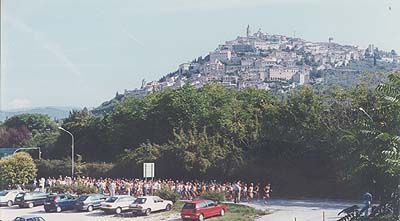
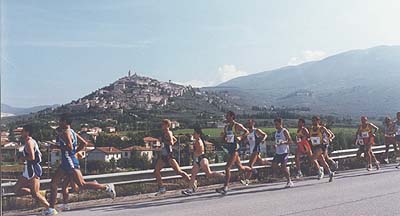
    18/9/99 – Due momenti immediatamente successivi alla partenza da Trevi

    Gara podistica Nazionale Trevi -Montefalco 1999b

    Classifica MASCHILE

    Posiz.

    Finale

    Cognome

    Nome

    Societ

    Categoria

    Tempo
    Totale

    Media
    Totale

    1

    El Makhrout

    Abdelaziz

    G.S. A. MONTI TERNI

    18-29

    1.40.07

    3,20

    2

    Di Lello

    Luigi

    G.S. CARABINIERI BO

    30-34

    1.42.21

    3,25

    3

    Conti

    Piergiorgio

    2S ATLETICA SPOLETO

    1.44.04

    3,28

    4

    Pontani

    35-39

    1.44.35

    3,29

    5

    Benedetti

    Ferdinando

    C. U. S. PERUGIA

    1.46.38

    3,33

    6

    Ceccarelli

    Giorgio

    POLISP. CAVA FORLI’

    1.47.27

    3,35

    7

    Dabrowsky

    Dariusz

    ALITALIA CLUB ROMA

    1.49.35

    3,39

    8

    Paioni

    Diego

    ATLETICA PONZANO TV

    1.50.21

    3,41

    9

    Patrizi

    Gaetano

    1.51.16

    3,43

    10

    Isola

    Massimo

    POL. CARSULAE TR

    1.52.02

    3,44

    11

    Corsetti

    Francesco

    1.52.29

    3,45

    12

    Finocchi

    Sauro

    ATL. MONTEGRANARO

    1.53.59

    3,48

    13

    Pompei

    Enrico

    ATLET. AVIS PERUGIA

    40-44

    14

    Di Salvo

    Giuseppe

    1.56.29

    3,53

    15

    Paradisi

    Renzo

    ATLET. VILLA CANDIDA

    1.57

    3,54

    16

    Testa

    Oriano

    1.57.58

    3,56

    17

    Zampolini

    Sylva

    ATLETICA FOLIGNO PG

    1.58.39

    3,57

    18

    Cosentino

    Daniele

    POL. ALPEA LOM. TO

    2.01

    4,00

    19

    Cugnetto

    MARINA MILITARE

    2.03

    20

    Pallotta

    Roberto

    2.29

    4,01

    21

    Gianfelici

    Paolo

    2.01.21

    4,03

    22

    Capone

    R.T. SENATO R O M A

    2.01.43

    23

    Napolini

    Franco

    2.02.17

    4,05

    24

    Malavasi

    GS GABBI PONT. BO

    45-49

    2.02.32

    25

    Mencaroni

    Guerriero

    50-54

    2.02.48

    4,06

    26

    Cesarini

    Marco

    A.S. FLAMINIA FOLIGNO

    2.03.35

    4,07

    27

    Della Mora

    Maurizio

    C.U.S. CAMERINO MC

    2.03.50

    4,08

    28

    Venturini

    2.04.07

    29

    Bernini

    Michele

    PARK PRE LI TRIATH

    2.04.21

    4,09

    30

    Della Manna

    2.04.48

    4,10

    31

    Naldi

    55-59

    2.05.14

    32

    Saporiti

    Salvatore

    2.05.20

    4,11

    33

    Proietti

    Rubino

    GP CANEPINA VITERBO

    2.05.39

    34

    Massini

    ATLETICA CVA B.TREVI

    2.06.02

    4,12

    35

    Luciani

    Alessandro

    2.06.03

    36

    Volpi

    ASPA BASTIA UMBRA PG

    2.06.20

    4,13

    37

    Leogrande

    Giovanni

    AMATORI ATL. ACQUAVIVA

    2.06.22

    38

    Massarelli

    POD. INTERAMNA TR

    2.06.32

    39

    Cantoni

    Giacomo

    2.06.36

    40

    Toretti

    Riccardo

    2.06.57

    4,14

    41

    Guercini

    Bruno

    PODISTICA VOLUMNIA

    2.07.05

    42

    Mainetti

    2.07.58

    4,16

    43

    Martinetti

    Fabrizio

    CIRC. DIP. PERUGINA

    2.08.01

    44

    Manzetti

    2.08.37

    4,17

    45

    Righini

    Solerte

    GP D.L.F. RIMINI

    2.09.19

    4,19

    46

    Riccini

    Danilo

    ARCS STROZZACAPPONI

    2.09.41

    47

    Tinelli

    2.09.51

    4,20

    48

    Menghi

    Nino

    ATLETICA MAMELI GAIRSA

    60 e oltre

    2.09.52

    49

    Greco

    Aniello

    G.S. CSAIN PERUGIA

    2.09.59

    50

    Scrocca

    Ilario

    VILLA AURELIA ROMA

    2.10.47

    4,22

    51

    Negroni

    Pietro

    POL. LA TORRE CLUSONE

    2.11.09

    52

    Tocci

    Ennio

    2.11.24

    4,23

    53

    Gaggia

    Leonardo

    2.11.59

    4,24

    54

    Vinci

    Andrea

    2.12.14

    55

    Jovine

    2.12.15

    56

    Ciccolella

    2.12.50

    4,26

    57

    Celesti

    Corrado

    2.13.24

    4,27

    58

    Puletti

    Adelio

    2.13.30

    59

    Bellachioma

    Enzo

    2.13.31

    60

    Poggianti

    2.13.33

    61

    Gaudenzi

    Lorenzo

    ATLETA LIBERO TREVI

    2.14.38

    4,29

    62

    Mauro

    RUNNERS LIVORNO

    2.14.39

    63

    Carlettini

    Stefano

    2.15.17

    4,31

    64

    Bandini

    Fabio

    2.15.30

    65

    Guglielmini

    Armando

    2.15.34

    66

    D.L.F. CIVITAVECCHIA

    2.15.45

    4,32

    67

    Gori

    Decio

    2.16.12

    68

    Bianchini

    2.16.40

    4,33

    69

    Fiorucci

    2.17

    4,34

    70

    2.17.12

    71

    Fidel Mele

    2.17.22

    4,35

    72

    Businari

    GP DEL CONSELVANO PD

    2.18.54

    4,38

    73

    Moricoli

    PODISTICA LUCREZIA

    2.19.01

    74

    Pierdet

    Francois

    ACS SCUOLA GERMANICA

    2.19.22

    4,39

    75

    Ebano

    TEAM PUCCI SPORT RM

    2.19.24

    76

    Mattioli

    Leonello

    2.19.47

    4,40

    77

    Toccacieli

    2.20.02

    78

    Moroni

    2.20.05

    79

    Gianfranco

    2.20.27

    4,41

    80

    Pieri

    2.20.39

    81

    Severini

    2.20.55

    4,42

    82

    Felicetti

    2.20.59

    83

    Camillacci

    Carlo

    2.21.12

    84

    Marinelli

    Fausto

    2.22.06

    4,44

    85

    Castellani

    ATLETICA GARDENIA

    2.22.33

    4,45

    86

    ATLETICA CAPANNE PG

    2.22.49

    4,46

    87

    Ceppi

    Agostino

    2.24.26

    4,49

    88

    Binni

    2.25.58

    4,52

    89

    Piccioni

    Sergio

    2.26.49

    4,54

    90

    Pellizzardi

    CORRICAMMINA FERRARA

    2.26.50

    91

    Rondini

    Albino

    2.27.13

    92

    Ortica

    Adriano

    2.28.02

    4,56

    93

    Ghetti

    Domenico

    94

    Cortona

    Orlando

    U.I.S.P. PERUGIA

    2.29.43

    4,59

    95

    Caporaletti

    2.29.55

    5,00

    96

    2.30.02

    97

    Dino

    2.31.09

    5,02

    98

    Bisaccioni

    AMATORI POD. TERNI

    2.31.49

    5,04

    99

    Mazzanti

    Adelmo

    2.32.24

    5,05

    100

    Roani

    Gianpiero

    2.32.28

    101

    Braga

    Mario

    GP ACLI COLOGNA FE

    2.32.46

    5,06

    102

    Pambuffetti

    2.33.27

    5,07

    103

    Sebastiani

    2.33.31

    104

    Mazzoli

    G.Paolo

    LIBERTAS S.BIAGIO TV

    2.33.41

    105

    Liuni

    Sabino

    ATLET. DEL PARCO ROMA

    2.33.48

    5,08

    106

    De Angelis

    2.34.13

    107

    Falaschi

    Oliviero

    2.34.23

    5,09

    108

    Orioli

    2.34.48

    5,10

    109

    Foschi

    2.34.53

    110

    Leotta

    2.34.57

    111

    Taddei

    Nazzareno

    2.35.08

    112

    Rossato

    2.35.18

    5,11

    113

    Ricci

    Angelo

    2.36.58

    5,14

    114

    Martinoia

    G.P. BANCARI ROMANI

    2.37.04

    115

    Biviglia

    G. Franco

    2.37.15

    116

    Vitale

    Claudio

    2.37.38

    5,15

    117

    Antonelli

    2.37.49

    5,16

    118

    Bonacci

    Benedetto

    ATLETA LIBERO ROMA

    2.38.27

    5,17

    119

    Caterino

    2.38.28

    120

    Cervelli

    AVIS AIDO RIETI

    2.39

    5,18

    121

    Casciotta

    Roul

    2.39.38

    5,19

    122

    Falchetti

    2.39.47

    5,20

    123

    Lodovichi

    UP POLICIANO AR

    2.41.01

    5,22

    124

    Gradi

    2.42.25

    5,25

    125

    Gramaccia

    TODI RUNNERS PG

    2.43.10

    5,26

    126

    Linguanti

    Taddeo

    POL. CAPODACQUA

    2.43.17

    5,27

    127

    Spigarelli

    Ezio

    2.43.22

    128

    Cecchini

    Rubens

    2.46.01

    5,32

    129

    Egidi

    G.Battista

    A.P. PONTE FELCINO PG

    2.46.55

    5,34

    130

    Fusconi

    Sabatino

    2.47.23

    5,35

    131

    Picciafuoco

    2.50.54

    5,42

    132

    Celeste

    Antonio

    CONAD AVIS CHIETI

    2.51.36

    5,43

    133

    Angeloni

    Alberto

    2.52.18

    5,45

    134

    Ginocchietti

    Aldo

    CASSA RISPARMIO PG

    2.53.26

    5,47

    135

    Arfanotti

    ATLETA LIBERO LA SPEZIA

    2.54.44

    5,49

    136

    Moretti

    2.58.14

    5,56

    137

    Bocci

    3.09

    6,00

    138

    Carducci

    Guerrino

    3.35

    6,01

    139

    Masiero

    3.03

    6,06

    140

    Lazzari

    Alvaro

    3.06.25

    6,13

    141

    Panico

    Umberto

    3.07.54

    6,16

    142

    Santini

    ATL. LIBERO AQUAVIVA

    3.16.25

    6,33

    143

    Ciancaleoni

    3.39.12

    7,18

    144

    Sfarra

    ATL. FARNESI VINI PE

    4.11.36

    8,23

    145

    Canestrelli

    4.12.21

    8,25

    Elaboraz.: Maurizio Boncio

    CLASSIFICA FEMMINILE

    Bruni

    Deborah

    30-39

    1.59.41

    3,59

    Pannacci

    Michela

    2.08.06

    Ferretti

    Nicoletta

    2.10.11

    Cagnoni

    Alessandra

    2.13.08

    Raffi

    2.23.50

    4,48

    Turchetti

    Elisa

    2.25.41

    4,51

    Ughi

    Fabrizia

    2.32.45

    Draoli

    M.Cristina

    2.40.57

    Mammoli

    Daniela

    2.42.18

    Felici

    Annarita

    2.43.08

    Michelin

    Cinzia

    ATL. NORD MONTEBELLUNA

    2.45.09

    5,30

    Pirrocco

    Assunta

    40 e oltre

    3.12.28

    6,25

    999 Ritorna alla pagina Ritorna alla pagina Mostre e performances

    Ritorna alla pagina ATLETICA C.V.A.

  • Dall’Australia

    Dall’Australia

    Incredibili rapporti tra un piccolo paese italiano e un continente agli antipodi

    Mostra collettiva nel chiostro di S. Francesco
    ottobre-novembre 1997

    Alla ricerca di Trevi attraverso le fonti letterarie
    1992 – 2001 (english)

    Grandioso progetto di un architetto che ha eletto Trevi sua seconda patria. Luglio 2003

    Ritorna alla 903

  • In Search of Trevi

    ________________________________________________

    In Search of Trevi

    _______________________________________

    ___________________________________________________________________________

    102

    I had read about Trevi only a few weeks previous to wandering into the town on a hot summer day in 1992. At that time I was chasing information on the more obscure of Italy’s folkloric and religious festivals and having read of the town’s little-known mid-winter event, l’Illuminata, celebrating its patron and protector, Sant’Emiliano, I had decided to divert way east on the long and picturesque route to Foligno from Siena and call by the hill-town on my way back to Rome. From Foligno a local bus meandered a few kilometers up steep and narrow roads through terraced olive groves. I had one fellow-passenger – an old lady with a lot of dignity, a very stiff leg and matching hairdo who had been into the local big smoke for a morning’s shopping. In twenty minutes or so I found myself in a quiet square, Piazza Garibaldi, outside the main gate to the town, no means of escape other than my feet until around five, by which time I imagined I would have seen this sleepy town perhaps three times over. Following my ridged-legged friend who I had handed off the bus I passed through the gate and was surprised to find of a tourist office in the corner of the main square. A small group were there being helped by an attentive and interested woman with whom I inquired about the availability of information on the January festival – But how did you find out about this in Australia? I felt a little less than the informed traveller when I confessed that I had read about it in a guide to Umbrian festivals I had found in Rome some weeks before.

    By afternoon’s end following a lazy summer lunch in a local old-fashioned trattoria, my newest best friend from the tourist office and her father, an octogenerian whose store of the arcana of local history, lore and legend is endless and has resulted in the publication of three fat books, had treated me to the best private tour I could have had. The encounter began the opening of the door to the embrace of a loving and interesting family who are much bound to their fascinating locale and are highly informed of its traditions and history. I had had luck like this a few times in Italy and can only credit it to an unbounded generosity and responsiveness of the Italian heart to those interested in it, but this was truly exceptional and they remain people very dear to me.

    My reaction was an immediate bond with this town and its history. I compulsively began the search for Trevi in the writings of travellers. What I was looking for was a key to Trevi’s past apart from that which would be found in the conventional literature of formal history – that history seen by the witnesses of the bygone, and having before so easily found that entree to the backgrounds of more well-known Italian cities I expected to go down the same research path. I didn’t have much initial difficulty and was in fact surprised by the number of unlikely writers who mentioned Trevi I had found after a few hours work in the British Library. In them, however, that past I sought eluded me for all of the authors’ references implied a similar confession – I came, I saw, I did not enter, but looked from afar. Their non-the-less-fascinating and often esoteric writings do however, offer that enticement of the past as a foreign country and some interesting glimpses of Trevi’s unique history.

    One of Italy’s forgotten small renaissance city-republics Trevi, and its peripheral area from nearby Spoleto at the southern opening of the Valle Umbra to Perugia at its farthest north, have been the subject of the descriptions of ancient Roman geographers, the diaries of both renowned and forgotten wanderers, the famed English poets of the eighteenth and nineteenth centuries, forgotten German Romantic novelists, and the travel commentaries of voyaging’s European and American greats for more than two thousand years. Although much of these writings are found in books much unused and languishing in unvisited library corners the city has also had attention paid it in modern travel literature as well and its history and data, more briefly formatted, are easily accessed in guides printed in recent years. The city’s strikingly picturesque appearance is, however, so little known outside Italy that photographs of it have been used to illustrate other Italian towns not even remotely near the locale, but needing a catching photograph when a feature article or cover illustration has called for it.

    Where the dome and campanile of Trevi’s main church stand sentinel at the summit of Colle di Sant’Emiliano its people have lived since pre-Roman times. After the region’s original inhabitants, the Umbri, had been subdued by the Romans a temple to Diana Trivia, the protectress of cross-roads, was built on the site to overlook the plain below. Through this flatland’s length runs the old Via Flaminia, the stone artery laid between 223 and 220 B.C. joining the capital to the Adriatic at Rimini and other strategic coastal points. The spread of Christianity from Rome to Umbria was in fact facilitated by this highway and in that process the temple was supplanted by a church and the town grew beyond its Roman walls. These were twice expanded in the mediaeval period and with this passage of time the city took on its bleached rose-cream aspect and the buildings on the conical peak have spread to cover more than half its surface. Crowning the summit is the church of the patron, the Armenian Saint Emiliano, who was also Trevi’s first bishop.

    For many centuries guards must have looked out from this natural vantage point, keeping fellow citizens from incursions led by dukes and warlords of neighbouring Foligno and Spoleto and Trevi’s traditional rival, Montefalco, sitting on high upon the horizon across the valley plain. Below this aerie, beyond the slopes and terraces of olive groves lush river flats are still very much divided into the pattern of fields marked out by the ancient centuriation method used when Augustus settled the area with pensioned-off legionaries. Given small allotments they effectively and profitably populated the area at little expense to Rome’s economy and much to its gain. Scattered on and between the farms are little-known simple romanesque and more somewhat more sophisticated renaissance churches, some founded on pagan sites sacred to those soldier farmers, others dedicated to obscure local saints. Many continue in Christian format the local ancient fertility cults and rituals that have long expressed the farmers’ dependence on abundant harvests. More than a few are the quiet resting places of unique frescoes and sculptures which have not appeared in the literature of art history and sleep in wait to be made the subject of a book or thesis.

    In Roman times the town was bi-located and its citizens inhabited the site on high and another, now forgotten, on the plain below, cut through by meandering watery tracts. The lower location and the nearby once-sacred spring of Clitumnus and its homonymous temple were then accessible from Rome by boats carrying emperors, citizens, wares and slaves from the capital along the Tiber, thence to the Teverone and on to the Clitunno. The pleasure-seeking Caligula twice sailed this way to the spring to take part in the January celebrations of the festival of Jupiter, the more important May events in honour of Clitumnus, or just to consult the local oracle-god. One of these visits was depicted by Domenico Bruschi in 1877 on the curtain of Trevi’s tiny bijou Teatro Clitunno where concerts are held and plays regularly performed. Emperor Flavius Honorarius too once stopped here when on return to Rome.

    Fourth and fifth century earthquakes destructively re-arranged the convenience of the flow and continuity of these streams, but long before this the now quiet waters of the spring of Clitumnus had been visited by the writers Properzio, Juvenal, Silio Italico, Virgil, and the geographers Pliny the Elder, Strabo and Claudius Ptolomaeus and lauded for their purifying and healing qualities and the pastoral beauty of their setting. The spring’s water was once believed to bring a greater intensity to the symbolic whiteness of bulls selected from a special breed, then neither sullied by labour or mating, but grazed and bathed here in preparation for triumphal processions and mystical pagan sacrifices. Byron visited the spring in 1817 and drew on that tradition to bring through verse to his reading public the following year some of the beauty of the Umbrian landscape and its classical associations:

    But thou, Clitumnus! in thy sweetest wave
    of the most living crystal that was e’er
    The haunt of river nymph, to gaze and lave
    Her limbs where nothing hid them, thou dost rear
    Thy grassy banks where-on the milk-white steer
    Grazes; the purest god of gentle waters!
    And most serene of aspect, and most clear;
    Surely that stream was unprofaned by slaughters –
    A mirror and a bath for Beauty’s youngest daughters!

    (Childe Harold’s Pilgrimage, Canto IV, 60 -68).

    The translation of Virgil’s Aeneid by the English poet Dryden was at its most skilled when mentioning the Clitumnus and its surrounds (VII, 563 – 571).

    The sacred spring apart, the nearby southern parts of Umbria were visited by many artists, writers and followers of the 18th. century tradition of the Grand Tour. They were drawn specifically by the classical associations and arcadian references not only of the spring and its temple, but also the not too distant Cascate delle Marmore near Terni, an artificial waterfall created by ancient Roman engineers and 15th. and 18th. century improvements by which the course of the Velino was diverted to join the Nera for the practical reason of draining marshlands. The works resulted in the creation of the highest and amongst the most spectacular falls in Europe. In 1765 James Boswell found them prodigious wild and Joseph Addison, sixty years earlier, thought them more impressive than all the waterworks at Versailles. Byron, Addison, Hester Lynch, Shelley, Anna Miller, Edward Wright and Richard Wilson came here too, to mention but a few of the English visitors before touching the edge of the Continental circle which included de Brosses, Marie Vignee le Brun, Goethe, Moritz, Mommsen, Seume, Carducci, Corot and countless others whose horses and carriages often crowded out the viewing points in the travelling season. Tourist inundation is not a problem unique to modern travel. We can imagine amongst these sightseers Byron’s fantastic travelling coach complete with library and menagerie. The writings and drawings of many of them made the sites they familiar to their untravelled contemporaries.

    Even two centuries before this, in 1581, the French essayist Michel Montaigne admired Trevi from below its high crowning point and terraced olive groves that gave the city the title queen of the olive trees. He unhappily set a precedent for many future travellers by quickly pressing on to Foligno. The view, however, inspired one of the very few geographic descriptions found in his work. Disappointingly, although Trevi has been constantly mentioned in literature since the invention of the printing press (which, by the way made it first appearance in Umbria and the fifth in Italy in this town in 1470), we must infer from the nature of their writings that few authors were sufficiently intrigued beyond the effect of the commanding aspect to ascend the steep incline and enter one of the many gates that gave access to the city through its walls.

    Perhaps the city’s seeming inaccessibility and the presumption that the climb to reach it would only be rewarded with the discovery of more of the then unpopular so-called primitive works of the Romanesque and Renaissance-Gothic traditions which decorated the more accessible churches on the valley floor repelled the snobs of the Grand Tour (Addison, Wilson, Dryden and the like!). Those works were of no interest to the mostly highly focused purists in quest of the fashionably classical and wanting to rub shoulders exclusively with the ancients and the legacy of their times. One of them was the English antiquary, Edward Wright, who, having been travelling companion and tutor to the young George Parker, Earl of Macclesfield, recalled Trevi – again by description of a view from the road – in his book Some observations made in travelling through France, Italy & c. in the years 1720, 1721 and 1722 which was published in 1730:

    Another small town called Treva [sic], about four miles further, situated on a
    round hill lower than the great mountain is a very pleasant sight; it seemed
    very compact: and a spire steeple just in the middle of it has a very good effect.

    And on he passed as well! It was however, in Trevi, where the 25 year old Parker took refuge with a Venetian mistress in early 1722, pre-occupied with more physical passions like many other young aristocratic English travellers, often called macaronis because of their taste for things Italian and the frequently more louche lifestyle of the Italian courts. Too distracted, he has certainly left us no record of his stay.

    When German scholars began to reverse the exclusive interest in the classical and the era of Romanticism began Trevi’s location and suggestive image inspired two German writers, the dramatist August von Kotzebue and the novelist Wilhelm Heinse, and it was used in their work. Kotzebue saw Trevi during his 1804 – 5 tour of Italy and from the sight of the city he took a flight of fancy resulting in his book Babbel, oder aus zweyen ueberein das kleinst. Ein historische Posse in ein Aufzuge. He wrote: The road to Foligno is romantic. Amongst other things you suddenly come in sight of a town built around a mountain exactly in the same manner as the town of Babylon is generally represented, the road winding in a spiral direction to the top. The translator surely meant Babel and the lines conjure up the image of Pieter Breughel’s work of 1563 The tower of Babel, and if Kotzebue was referring to pictures of similar iconography the image holds true, but only if your knowledge of Trevi is limited to the view from below. Heinse’s experience may have been different. An art historian as well as a novelist, he spent three years in Italy from 1780 to 1783 and used Umbrian locations, including Trevi and the spring and temple of Clitumnus, as idealized and dream-like settings in his semi erotic novel Ardinghello, oder die Gluckseeligen Inseln, ein Italienische Geschichte aus dem sechzenten Jahrhundret. The lovers in this obscure book, Ardinghello, a painter and humanist (Heinse’s literary alter-ago perhaps?), and Fiordimona take lodgings in Trevi for one night during which they descend the slopes of Colle di Sant’Emiliano to the spring and temple. For an art historian and a writer of intense imagination a visit to the shadowy streets and palaces within the walls on high should have been an irresistable urge, but if he caved to it Heinse has disappointingly left us no record either.

    Some years later Heinse’s and Kotzebue’s fellow-German, the historian Ferdinand Gregorovius, passed by Trevi. Although his writing initially impresses upon the reader an intimate knowledge of the area he must have compiled his journal with fading memories quite some time after the trip and so made a complete jumble of the order of the towns along the Flaminia in the Valle Umbra. All the same, he is right when he says that the signature of Lucrezia Borgia is to be found on a document in Trevi’s archives. Was this second hand information or did he visit the town? He makes no mention of having done so.

    Perhaps an interior vision of the elevated town as a kind of forbidden city overcame the writers who chose only to see Trevi on high. Whatever their reactions this preference for distance continued into the 19th. century, holding back Giacomo Leopardi and Nathaniel Hawthorne as well. Although they have left the most evocative word images of Trevi ever written they too, having glimpsed the city, trundled on by in their carriages. In 1822, finally escaping the stifle of of the emotional claustrophobia of his family home in Recanati and eager for Rome, Leopardi obviously saw in the view of the city hovering aloft a symbolic and vision-like place, floating in limpid light and breezy air, the dazzling rays of the sun reflected in the windows of its building’s windows, and the walls seeming to spin around it. The inspiring view was the embodiment of a brilliance and liberation that is the very essence of his description of Trevi in Song 3, Verses 7 and 8 of the Paralipomeni, but is impossible to translate the original lines and retain their unique suggestiveness. No time to tarry, he headed on for the freedom of Rome for which this brief sighting of the town was a significant prelude of the imagination.

    As he headed in the opposite direction 36 years later, escaping a Rome he obviously had detested, and after a break and lunch at Spoleto, Hawthorne’s reaction to the sight of Trevi was equally eidetic, even fantastic. Rome and its people had irked him as did most things foreign to his waspish Protestant mentality. He saw the religion of the Papal States as witchcraft; its society as threatening, disordered and demanding; and the inertia of its political system a vortex. Some people are not meant to travel and perhaps Hawthorne was one of them! His words on Trevi, however, seem to mark a point of transport from his inability to accept that which was not akin to homeland and, paradoxically, in terms of his initial reaction to the atmosphere of a country known to inspire writers and artists, they are the most aptly descriptive ever written on Trevi. Interestingly they maintain that distance consistently, even instinctively felt by all writers who preceded him:

    I am so tired and sleepy that I mean to mention nothing else tonight except the city of Trevi, which, on the approach from Spoleto, seems completely to cover a high peaked hill, from its pyramidal tip to its base. It was the strangest situation in which to build a town, where, I should suppose, no horse can climb, and whence no inhabitant would think of descending into the world, after the approach of age should stiffen his joints. On looking back on this most picturesque of towns (the road of course, did not enter, as evidently no road could), I saw that the highest part of the hill was covered with a crown of edifices, terminating in the church tower: while a part of the northern side was too steep for building; a cataract of houses flowed down the western and southern slopes. There seemed to be palaces, churches, everything that a city should have; but my eyes are heavy, and I can write no more about them; only that I suppose the summit of the hill to be artificially tenured, so as to prevent its crumbling down, and to enable it to support the platform of edifices which crowns it.

    ( Passages from the French and Italian notebooks of Nathaniel Hawthorne, Nathaniel Hawthorne, 2 volumes, Strahan and Co., London, 1871).

    Whilst Trevi is vividly extant in literature it is actually little known in historic images and misrepresented by modern ones. As you enter the town’s centre from Piazza Garibaldi (some centuries ago the site of a lake and later the market place) and stroll towards the central Piazza del Comune, in passing through the gate and into the vaulted passage under the old bell-tower and by the tourist office you see a fresco at the left depicting the guardian Sant’ Emiliano kneeling at the feet of a Madonna and Child flanked by his deputies, San Benigno and San Vincenzo. The group, painted by a forgotten local in 1703 to celebrate Lucca’s restitution to Trevi of the relics of these cohorts of Sant’ Emiliano, hovers over the earthly domain of these heavenlies. The city is seen resplendent with churches, towers and palaces and instantly calls to mind Hawthorne’s description of the city of a century and a half later – probably little different. This image unfortunately did not set a standard for the coming years and went askew in 1832 when the London publishers Jennings and Chaplin printed Goodall’s engraving of Trevi after a drawing by James Duffield Harding in a book on Italian towns. Harding may have lost his original drawings and made up something from a poor visual memory, or Goodall perhaps chose to fantasize the town’s appearance. There is no resemblance. Adding insult to injury a couple of years back an English guide to central Italy published a shot of another Umbrian city’s more picturesque main square and claimed it to be the Piazza del Comune. More recently an Australian newspaper used a panoramic photograph of Trevi with the caption “a typical Tuscan hill town” in yet another article on the tired cliche of that other region’s cooking schools. Even last year a photograph of Trevi as seen from the Flaminia appeared on the cover of an American novel set in the Abruzzese town of Castel del Sangro (The miracle of Castel del Sangro by Joe McGinnis, Broadway Books, New York, 1999). The unique appearance Trevi remains unfortunately not widely known.

    The authors mentioned earlier are only a small number of those who have written on the city and although new and exciting things are happening quite rapidly it is fairly well covered by easily-found English language guides. An armchair traveller could find quite a bit to read on Trevi, but better to go and see this town which has somewhat eluded modern reality as well as quite a few writers for yourself – and soon, for in a sense having entered the 21st. century only recently Trevi has so rapidly crossed the last ten decades it seems almost have jumped the 20th. It now has underground parking, newly styled museums of local art and interest, good eateries, and hotel accommodation from the low priced to those categorized with more than a few stars, private apartments to rent and a range of farm-stays organized through local Agriturismo. The Modern Flash Art Museum, associated with the international art journal of the same name, is perhaps a startling surprise for those not travelling on roads to the past. The cloisters of the mediaeval and wonderfully cluttered church of San Francesco, in which the man after whom it is named preached, not long ago accommodated a modern art installation by an Australian artist grouping old shoes of local trevani accompanied by brief biographical sketches of their owners. The Museum of the Culture of the Olive tells much about the town’s commercial and rural past. Local publication is small but diverse and interesting.

    Both its proximity to bigger centres – Rome is two hours away, Perugia half an hour and Foligno (the local big smoke) ten to fifteen minutes – have in recent years brought to this town’s locals whose families go back generations an additional small creative community of people, artists and writers, as well as others simply in search of village and rural peace where they can live in serenity yet have the access to conveniences such as bookshops, the bigger galleries, museums and cinemas, or even just a day out on the town. It was only ten years ago, the tourist trade almost uncatered for, that the presence of the past was still palpable: in the quiet bustle of small-town business around the town hall, to be glimpsed in the still and silent shadowed cortili of 15th. and 16th century palaces hung with washing and lined with potted plants, churches not curated as if they were museums, a maze of narrow streets cobbled in the traditional Umbrian style in which you could wander in shadows on enervating summer days and meet with the drift of the aromas of meals being cooked at midday, fragments of frescoes of the early primitive school here and there in backstreet and archway, the odd little shop which sold stock which appeared to have been there since the 50’s, and all this in the setting of a daily life undertaken almost at the pace of slow motion disturbed by very few outsiders. I remember one day rushing to the edge of a friend’s garden terrace to see who was speaking German in the street below. What invasive strangers had arrived here? I jealously wanted this place to myself! That atmosphere is, fortunately, mostly still there and if the obvious lessons of what has happened elsewhere are heeded the tardy arrival of the tourist trade up the steep approach may not obliterate the traces of the history of this tiny example of an old renaissance city-state.

    In Trevi’s culturally rich hinterland once rival villages of more or less historic importance, most harking back to pre-Roman times, Bevagna, Spello, Spoleto, Sellano and Montefalco (one of the interesting new go-slow cities challenging the uglier aspects of modern Italian life) to name a few, doubly repay the effort of a few minutes drive to explore their intriguing pasts. You can venture into most on a bus from Foligno which connects quickly to Rome via Intercity rail service. Who knows what past, present, or new friends you may encounter? I still wander up the hills to Trevi through those magic terraced olive groves which are perhaps haunted by Heinse’s lovers. It has captured me and it won’t let go.

    Tony Anderson, Melbourne, Australia
    (on tonjonandy@bigpond.com), 2001

  • Architetto Ken Sowerby

    Ken Sowerby

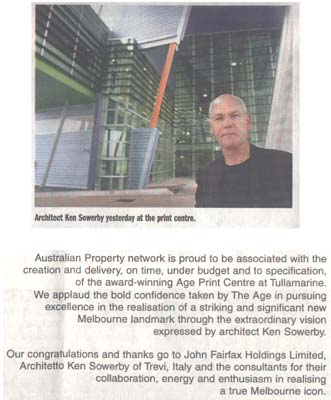
    Testata e parte della prima pagina di un numero speciale del giornale THE AGE di Melbourne, il giorno dell’inaugurazione della nuova sede progettata da Sowerby

    Nella prima pagina si ringrazia l”Architetto Ken Sowerby, di Trevi, Italia”
    (terza riga dal basso)
    Trevi - Architect Ken Sowerby at the print centre

    Altre notizie su Ken Sowerby

    Ritorna alla 903